There's a fork in the road, and education has to make a choice. Young people are fervently waiting for us educators to catch up with them, to empower them and to help them make the future. By offering a holistic way of seeing and being, a regenerative, ecological, life-affirming paradigm can help shape new and energising pathways for a more hopeful, and secure future.
– Stephen Sterling (Emeritus Professor, Plymouth University, U.K.) The above quote and the ones below have been sourced from Gaia Education: https://www.gaiaeducation.org. Education is the most important tool in the mission to prepare a new generation of conscious global citizens committed to caring for all forms of life and the health of the planet. If we want to prepare people to act and transform the harmful systems that are leading us to collapse, we need a new and regenerative approach.
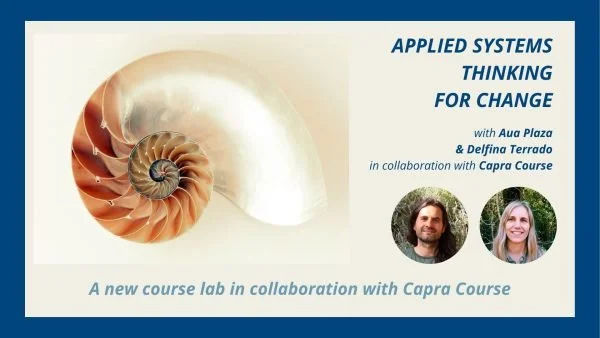
The IEA believes wholeheartedly in the sentiments expressed here and as an organisation we have made inroads in designing, writing and teaching units and courses of study in regenerative agriculture at an Australian University. Refer to the course in Regenerative Agriculture at Southern Cross University. One university or one course hardly meets the needs of Australian agriculture. There is a need for more courses on ecological (regenerative) agriculture across the breadth and depth of tertiary level agricultural education in Australia. A significant issue in introducing this form of learning is that it involves an engagement with holism in the form of holistic science, and it is near impossible for an academic trained as a conventional scientist to make room in their knowledge base for something as contradictory (to them) as holism. And yet in the case of most dualistic binary couples (reductionist science versus holistic science) it is possible for the two terms to forge a link and to support each other. Like most conflicts the answer lies in creating a win/win outcome and in this context the Institute would gladly provide some strategies for enabling this to happen. What is being referred to here is a holistic approach to learning and, in that respect, there is no better communicator on this issue than physicist and author Fritjof Capra. His book The Systems View of Life takes the reader on a journey into mechanistic science and from there into holistic science. From that vantage point he discusses ecological thinking, holarchy, self-organisation and spirituality, to name a few concepts. He doesn’t refer to regenerative agriculture although virtually all concepts informing holistic science find an expression in regenerative agriculture. Unfortunately, in the world today a lot of the commentary about regenerative agriculture is false and contaminated with concepts that might find a place in the practice of conventional agriculture, but are decidedly out of place in the world of regenerative thinking. Here is a comment from Capra in an interview he did recently with Nate Hagen who interviews leading thinkers across the globe and does so free of charge. If you are impressed with the interview look up his program online. It is called The Great Simplification: https://www.thegreatsimplification.com. Capra made the following comment in an interview called The physics of relationships and ecology: Without a systems lens, the full reality of the human predicament will never be understood. It is only when we adopt this kind of holistic, wide-boundary thinking that we are able to see the complexity and nuance of how the biosphere, geopolitics, economics, energy, and many other systems interplay with and influence one another. But historically, the scientific community didn’t utilize the power of systems thinking until a few groundbreaking individuals advanced and popularized that way of looking at the world.
|