Here’s your personal copy of the latest newsletter!͏‌ ͏‌ ͏‌ ͏‌ ͏‌ ͏‌ ͏‌ ͏‌ ͏‌ ͏‌ ͏‌ ͏‌ ͏‌ ͏‌ ͏‌ ͏‌ ͏‌ ͏‌ ͏‌ ͏‌ ͏‌ ͏‌ ͏‌ ͏‌ ͏‌ ͏‌ ͏‌ ͏‌ ͏‌ ͏‌ ͏‌ ͏‌ ͏‌ ͏‌ ͏‌ ͏‌ ͏‌ ͏‌ ͏‌ ͏‌ ͏‌ ͏‌ ͏‌ ͏‌ ͏‌ ͏‌ ͏‌ ͏‌ ͏‌ ͏‌ ͏‌ ͏‌ ͏‌ ͏‌ ͏‌ ͏‌ ͏‌ ͏‌ ͏‌ ͏‌ ͏‌ ͏‌ ͏‌ ͏‌ ͏‌ ͏‌ ͏‌ ͏‌ ͏‌ ͏‌ ͏‌ ͏‌ ͏‌ ͏‌ ͏‌ ͏‌ ͏‌ ͏‌ ͏‌ ͏‌ ͏‌ ͏‌ ͏‌ ͏‌ ͏‌ ͏‌ ͏‌ ͏‌ ͏‌ ͏‌ ͏‌ ͏‌ ͏‌ ͏‌ ͏‌ ͏‌ ͏‌ ͏‌ ͏‌ ͏‌ ͏‌ ͏‌ ͏‌ ͏‌ ͏‌ ͏‌ ͏‌ ͏‌ ͏‌ ͏‌ ͏‌ ͏‌ ͏‌ ͏‌ ͏‌ ͏‌ ͏‌ ͏‌ ͏‌ ͏‌ ͏‌ ͏‌ ͏‌ ͏‌ ͏‌ ͏‌ ͏‌ ͏‌ ͏‌ ͏‌ ͏‌ ͏‌ ͏‌ ͏‌ ͏‌ ͏‌ ͏‌ ͏‌ ͏‌ ͏‌ ͏‌ ͏‌ ͏‌ ͏‌ ͏‌ ͏‌ ͏‌ ͏‌ ͏‌ ͏‌ ͏‌ ͏‌ ͏‌ ͏‌ ͏‌ ͏‌ ͏‌ ͏‌ ͏‌ ͏‌ ͏‌ ͏‌ ͏‌ ͏‌ ͏‌ ͏‌ ͏‌ ͏‌ ͏‌ ͏‌ ͏‌ ͏‌ ͏‌ ͏‌ ͏‌ ͏‌ ͏‌ ͏‌ ͏‌ ͏‌ ͏‌ ͏‌ ͏‌ ͏‌ ͏‌ ͏‌ ͏‌ ͏‌ ͏‌ ͏‌ ͏‌ ͏‌ ͏‌ ͏‌ ͏‌ ͏‌ ͏‌ ͏‌ ͏‌ ͏‌ ͏‌ ͏‌ ͏‌ ͏‌ ͏‌ ͏‌ ͏‌ ͏‌ ͏‌ ͏‌ ͏‌ ͏‌ ͏‌ ͏‌ ͏‌ ͏‌ ͏‌ ͏‌ ͏‌ ͏‌ ͏‌ ͏‌ ͏‌ ͏‌ ͏‌ ͏‌ ͏‌ ͏‌ ͏‌ ͏‌ ͏‌ ͏‌ ͏‌ ͏‌ ͏‌ ͏‌ ͏‌ ͏‌ ͏‌ ͏‌ ͏‌ ͏‌ ͏‌ ͏‌ ͏‌ ͏‌ ͏‌ ͏‌ ͏‌ ͏‌ ͏‌ ͏‌ ͏‌ ͏‌ ͏‌ 
Institute of Ecological Agriculture

Institute of Ecological Agriculture

IEA Newsletter | August 2023


Editorial

Three stories in one

Story 1

Whitehaven’s plans to expand its coal mining operations could double the miner’s methane emissions by the end of the decade undermining Australia's global climate commitments. If the planned and proposed projects go forward it would roughly double Whitehaven's annual methane emissions from this year to more than 64,000 tonnes by 2030. Between now and 2050 those mines would spew out 1.2 million tonnes of methane greenhouse gas, an amount that would have a short-term warming impact roughly equivalent to annual emissions from 56 million cars!

Whitehaven’s ambitious expansion plans would potentially put it at odds with Canberra’s commitment to slash releases of the potent greenhouse gas. Australia, as a signatory to the global methane pledge, is committed to supporting a reduction of global methane emissions by 2030 of 30% from levels at the start of the decade. Whitehaven has four active mines and says that federal approval to expand its narrow bridge project is being finalised.

Methane has a devastating impact on climate because it has more than 80 times the warming power of carbon dioxide during its first two decades in the atmosphere. Halting emissions of the potent greenhouse gas is one of the most effective ways to combat climate change.

Reference: Aaron Clark, Sydney Morning Herald [Source].

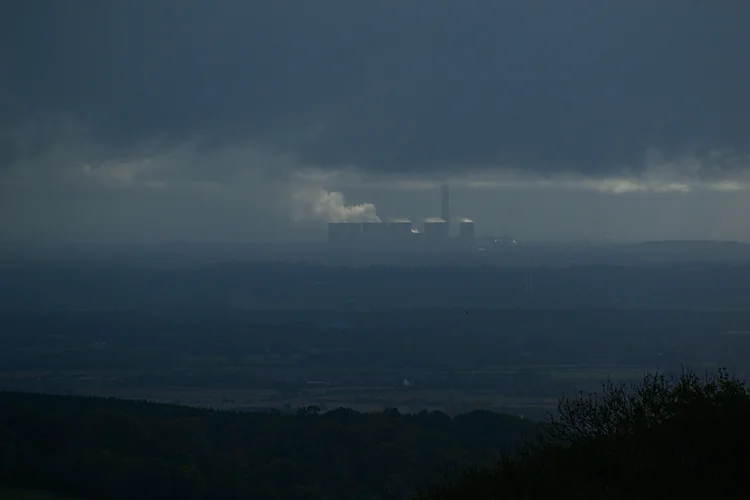
Drax power station, UK

Methane unleashed. Photo by Martin Sepion on Unsplash.

Story 2

The Mudgee Region and NSW have already been battered by record drought, bush fire, and flood. The environment, community and economy cannot withstand downward-spiralling extreme weather events. The cumulative impact of mining is dewatering the local landscape, threatening the Mudgee Region’s number one environmental tourist attraction – The Drip Gorge on the Goulburn River.

Climate science and the International Energy Agency have declared that to ensure a safe climate future no more coal can be mined. It is time to put a stop to coal expansion in the Mudgee Region.

Support the Mudgee Coal Alert campaign. Contact the NSW Premier and Minister for Climate Change today to tell them that NSW and the world will not meet necessary carbon reductions by expanding more coal.

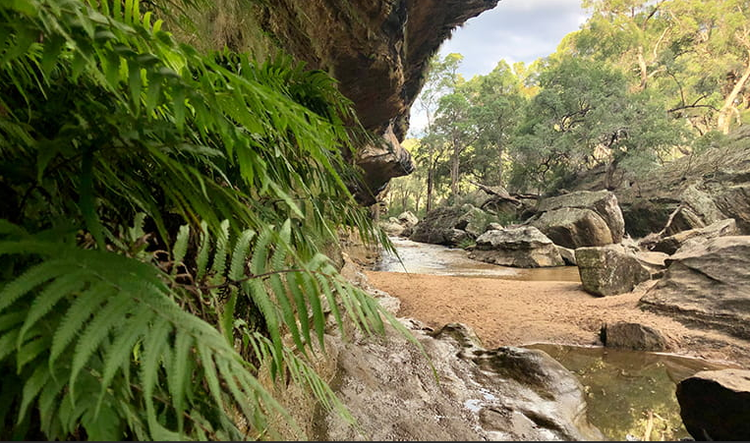
The Drip walking track, in Goulburn River State Conservation Area, meanders beside Goulburn River to The Drip, or 'the Great Dripping Wall’.

Tourist lure, the dripping wall in the Goulburn River National Park. Rainwater trickling through the porous rock wall makes it a cool oasis. © 2023 New South Wales Government

And story 3 provides part of the answer, we think!

Story 3

Exploring interdependence by Bianca Crapis

A few months ago, I stood beneath a tall and commanding waterfall, roaring endlessly towards me. I’m not sure what compelled me to follow the journey of a single drop of water. I typically witness waterfalls as one large gushing stream of water, but the edges captured my eye on this day, so I chose to follow the journey of one drop at a time.

I watched how the drop began as part of the whole, broke away for a brief moment to tumble down on its own, eventually returning to the powerful cascade becoming invisible again in the process of belonging to something greater. Each time my vision reached the bottom, my eyes searched to the top again to watch the fleeting journey of another single drop.

As I watched I felt, in each droplet’s journey, the timespan of a human life. From that brief moment we arrive as an individual on this earth, to the moments later when we are once again indistinguishable from the cascade falling. Maybe, for a moment, that water droplet seems independent of the waterfall. But it arrives from and departs again into that waterfall. It is brought into being by so much more than the waterfall – the clouds, the sun, glacial shifts and moving tectonic plates that influence weather events…

Again and again, I felt awe as the individual drop became eclipsed by the whole. When the water droplet was made invisible on its return to the waterfall, I could sense the majesty and the mystery of the world from which that drop came.

How we move between these two spheres of focus – the single drop falling, or the torrent of water roaring – can shape our responses to the climate crisis. Either we can focus on our own individual journey – ‘my needs’, ‘my desires’, ‘my goals’ – or expand our focus to our shared journey – our collective needs, desires, hopes and paths to healing – and in doing so, begin to see that the myriad of droplets are perhaps more intimately linked than we realised.

Focusing on the bigger picture can possess a similar level of ferocity and immensity as the waterfall. It can be overwhelming, commanding, out of our control. But maybe this overwhelm results from the fallacy of separatism; from the creation of structures and systems that hyper-individualise, only ever focusing on the droplet – as if it could ever be separate from the waterfall.

Spaces between water gush and water droplets

Embracing the more inclusive view. Photo by John Rodenn Castillo on Unsplash


The Roundup® saga

Should I or should I not apply Roundup on the soil this coming Spring or is it time to give the soil a rest? The following link will take you to some useful information on this question including excellent photos of plants that have been grown on soil that has had Roundup applied, annually, for the past 30 years:

 Read article here 

Article published in Regeneration International Journal.

Boy deciding whether to take the risk

You might think it’s an easy decision - 1. Photo by Jo Leonhardt on Unsplash


Two videos that we all need to watch

Video 1 goes for four minutes and is narrated by author and food commentator Michael Pollan. It sets the scene for video 2, which in 12 minutes tells you a lot about the soil and the interaction between bacteria, fungi, humus and plant roots. Worth watching again and again.

 Watch video 1 
 Watch video 2 

Once you have viewed the videos you may enjoy this telling comment from author Matthew Evans.

“Since the advent of corn, soy and cotton that are resistant to glyphosphate (Roundup) the use of the herbicide has reached stratospheric quantities with about 6.8 billion kg of herbicide sprayed throughout the world” (cumulative use, 1974-2021, cited in Evans’s book).

Evans continues:

The problem with glyphosphate, is that it kills not only the ‘weeds’ we see, but the subterranean life we don’t see. Some is passed down into the soil as root exudates, immediately having an impact on the rhizospheres. When every plant in a paddock dies, you also lose the entire first trophic (feeding) level – the initial sugars that feed the whole system – because there is no photosynthesis. And the absence of fresh sugars from plants, means much of the microbial life dies. Fungal populations that are reliant on their association with roots are particularly badly hit. Glyphosphate actively compromises fungal colonisation of soil, and blocks the synthesis of essential amino acids by soil microbes. It lowers plant immunity. It has also been suggested that glyphosphate can lead to more plant disease, because its use ‘reduces the overall growth and vigour of the plants, modifying soil microflora that affects the availability of nutrients required for disease resistance’.

Extract from Soil: The incredible story of what keeps the earth, and us, healthy, by Matthew Evans. See also Building Healthy Soil – an extended interview with Soil author Matthew Evans

Man unsure what to do

You might think it’s an easy decision – 2. Photo by Nathan Dumlao on Unsplash


Greenwashing in vogue

Regenerative agriculture has made significant inroads into the hearts and minds of many farmers around the world, but this success is beginning to attract others who wish to cash in on its growth. The term alluded to here is greenwashing, and manufacturers such as Bayer, the manufacturer of Roundup, are gearing up to become part of the regenerative movement. This sleight of hand deception has provoked the ire of Regeneration International (RI). The following article by Australian, Dr Andre Leu, a director of RI, suggests that greenwashers have a fight on their hands:

 Read article here 

The Institute of Ecological Agriculture has a two-pronged approach to minimise greenwashing. The first approach is in our name – ecological agriculture. We are regenerative but we are also ecological. Ecological is a scientific term which is about living organisms and their relationship with each other and the physical environment. Chemical companies can hardly make a claim to being ecological. The second prong involves our accreditation program (refer to https://www.ecoag.org.au/accreditation.) This program is designed to provide standards to counter the greenwashing whitewash. Those wanting to be accredited as ecological / regenerative and be consultants or educators would need to meet the standards as outlined in our policy. This approach is no different from what the accountancy or engineering professions have already, which ensures they are able to maintain standards.

The Institute’s accreditation framework identifies nine Knowledge Circles:

Nine knowledge circles

The Nine Knowledge Circles of the IEA’s Ecological Agriculture Accreditation Program. [Click to view larger format]

Those who seek to become accredited would need to demonstrate competencies in all of the light green Knowledge Circles and two of the four dark Knowledge Circles. More about this in the next edition of the Newsletter.


Institute news

The IEA has just completed nine webinars on Human Ecology and Ecological (Regenerative) Agriculture. 27 enrollees from all states of Australia met once a week for one hour and covered Knowledge Circles 1a and 3a above. The webinars are designed to introduce ideas that are central to management of the environment in the context of agriculture. Ideas relating to the universe (and the origin of life), learning, thinking, mindsets, values, consciousness, and holism are covered. The webinars cost $10/session thanks to a Federal Government Landcare grant.

The Institute is seeking funding to run a second program probably in October-November. Should you be interested please apply to kcochrane@ecoag.org.au.

Please pass the newsletter on to those who might be interested.

Editor: Kerry Cochrane
Technical support: Tony McKenzie.

Reminds me of Kermit

It's Not Easy Bein' Green is a song written by Joe Raposo, originally performed by Jim Henson as Kermit the Frog on both Sesame Street and The Muppet Show. Play song video. Green frog soft toy pattern by Kseniya-Omega. (CC BY-ND 3.0)


Become a member today!

facebook

We acknowledge the Traditional Custodians of these lands; on which we work, live and play. We pay our respects to the Elders past, present and emerging. It is important that we recognise their long histories with Country, and the care they have given to her for thousands of years. We celebrate, value and include people of all backgrounds, genders, sexualities, cultures, bodies and abilities.

Australian Institute of Ecological Agriculture Co-operative Ltd , Kite Street, Orange, NSW, 2800, Australia

Unsubscribe