|
Here is your copy of the latest issue of the newsletter. Enjoy!͏ ͏ ͏ ͏ ͏ ͏ ͏ ͏ ͏ ͏ ͏ ͏ ͏ ͏ ͏ ͏ ͏ ͏ ͏ ͏ ͏ ͏ ͏ ͏ ͏ ͏ ͏ ͏ ͏ ͏ ͏ ͏ ͏ ͏ ͏ ͏ ͏ ͏ ͏ ͏ ͏ ͏ ͏ ͏ ͏ ͏ ͏ ͏ ͏ ͏ ͏ ͏ ͏ ͏ ͏ ͏ ͏ ͏ ͏ ͏ ͏ ͏ ͏ ͏ ͏ ͏ ͏ ͏ ͏ ͏ ͏ ͏ ͏ ͏ ͏ ͏ ͏ ͏ ͏ ͏ ͏ ͏ ͏ ͏ ͏ ͏ ͏ ͏ ͏ ͏ ͏ ͏ ͏ ͏ ͏ ͏ ͏ ͏ ͏ ͏ ͏ ͏ ͏ ͏ ͏ ͏ ͏ ͏ ͏ ͏ ͏ ͏ ͏ ͏ ͏ ͏ ͏ ͏ ͏ ͏ ͏ ͏ ͏ ͏ ͏ ͏ ͏ ͏ ͏ ͏ ͏ ͏ ͏ ͏ ͏ ͏ ͏ ͏ ͏ ͏ ͏ ͏ ͏ ͏ ͏ ͏ ͏ ͏ ͏ ͏ ͏ ͏ ͏ ͏ ͏ ͏ ͏ ͏ ͏ ͏ ͏ ͏ ͏ ͏ ͏ ͏ ͏ ͏ ͏ ͏ ͏ ͏ ͏ ͏ ͏ ͏ ͏ ͏ ͏ ͏ ͏ ͏ ͏ ͏ ͏ ͏ ͏ ͏ ͏ ͏ ͏ ͏ ͏ ͏ ͏ ͏ ͏ ͏ ͏ ͏ ͏ ͏ ͏ ͏ ͏ ͏ ͏ ͏ ͏ ͏ ͏ ͏ ͏ ͏ ͏ ͏ ͏ ͏ ͏ ͏ ͏ ͏ ͏ ͏ ͏ ͏ ͏ ͏ ͏ ͏ ͏ ͏ ͏ ͏ ͏ ͏ ͏ ͏ ͏ ͏ ͏ ͏ ͏ ͏ ͏ ͏ ͏ ͏ ͏ ͏ ͏ ͏ ͏ ͏ ͏
Institute of Ecological AgricultureIEA Newsletter | August-September 2024
|
EditorialThe ABC Landline program on Sunday 28th July documents an important initiative underway in the Bega Valley. The story begins with Jocelyn and Tom McMillan discussing how they began egg production in the Valley, running their 5000 hens on land provided by farmers seeking the benefits that hens provide for pasture and soil management. Seeking more land the McMillan’s approached next door neighbour Barry Irvin and sought his interest in providing an area of land to be used in this way. Barry saw it as a production type that complemented his dairy operation at Bemboka that would improve his soils without the need to apply fertilisers. Barry agreed but there was more to this understanding that needs to be understood. Barry Irvin has a high profile in the Bega Valley given his role as Bega Group Executive Chairman, thus responsible for manufacturing milk, cheese, spreads such as peanut butter and Vegemite, and a turnover of 2 billion dollars annually (https://begagroup.com.au/our-range/). The growth of Bega Milk into the success it is today is largely due to the leadership of Barry Irvin. At this point the story took a different turn. Barry Irvin made contact with a Dutch Banker on another matter, and he offered the comment that any talk about sustainability was ‘old’ and no longer the vision to have. The language instead should be about circularity. The banker stated that Australia would not reach net zero goals unless it created a circular economy, and that The Netherlands had set its sights on creating this by 2050. What this means is that The Netherlands will move from a linear economy where resources are used and then buried in landfill, and where there is no attempt for them to be used in other ways, to a circular economy where finite resources are recovered, recycled and reused. We then saw Lisa McLean, CEO of Circular Australia, making this observation: The circular economy is the only economic platform we have to grow the economy given the constraints of the existing linear carbon intensive economy. Whilst carbon management through investing in natural resources such as wind and sun can enable the Australian economy save 55% towards net zero, it is the circular economy that will remove the remaining 45%.
The program then gave examples of how products from the ocean off the coast of the Bega Valley, and the sawdust from the forestry industry based at Eden, could be used to assist with farm production all of which demonstrates circularity.
|
|
This story about the Bega Valley and the engagement of Chairman of Bega Group and local dairy farmer Barry Irvin is only just beginning. The intent is to create Australia’s Regional Circularity Cooperative in Bega and to create the National Centre for Circularity there as well. The National Centre has strong support with the Bega Group investing 5 million dollars, and the NSW government investing 14 million dollars. This is a story about what can happen through the sharing of ideas, about the employment of imagination, and about a vision whose time had arrived. Well done, Bega. This story can be seen on ABC iview which was broadcast on July 28th 2024. The Institute of Ecological Agriculture supports circularity since, in essence, it is ecological.
|
|
|
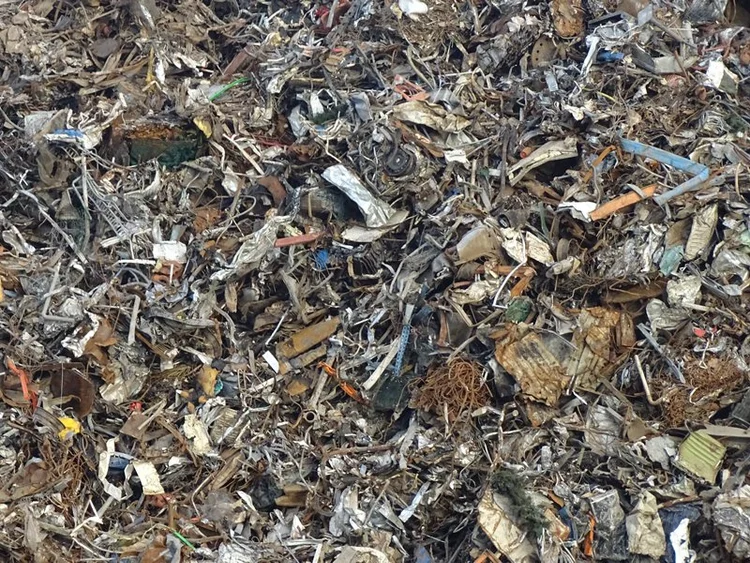
Non-circular detritus. Photo by Alf van Beem. Public domain. Source |
|
RoundUp decision by Michael Lee of the Australian Federal CourtThere was an extraordinary decision reported recently from the Australian Federal Court. Justice Lee said he had reviewed three types of scientific studies – epidemiological, animal studies and mechanistic evidence – that looked at the links between glyphosate and lymphoma and was not satisfied there was sufficient evidence that the chemical caused the cancer in humans. He also said that “on the balance of evidence, the plaintiffs failed to prove that glyphosate had caused their cancers”. He stated that scientific views on glyphosate risks varied and further data may be more definitive and could change his mind, but that "One thing is plain – the science is not all one way.” This story was picked up by Reuters who reported: “An Australian judge on Thursday dismissed a class action lawsuit claiming Bayer's Roundup weedkiller can cause a type of blood cancer, a ruling the company said it would seek to leverage in similar cases being fought in the United States.” [More here] If you missed out on this story you can review it here.
|
Attention Landcare groups and othersSuggestion: hire a video called The Need to Grow. It only costs $7 to hire and runs for 90 minutes. This could add some stimulus to the meeting and create lively discussions. Here is the link to follow up, if you are so inclined.
|
The Wentworth Group Landscape ReportThe Wentworth Group of Concerned Scientists has released its Blueprint to repair Australia’s landscapes: National case for a 30-year investment in a healthy, productive & resilient Australia. The report offers guidance on how to repair the accumulated damage caused in the hope that in the long-term continuing efforts will return landscapes to their original state. The report calls for a 30-year investment in a healthy productive and resilient Australia summarises the actions, benefits and investment opportunities, and sets out a high-level pathway for delivering a national repair effort.
The objective of the project is to make the case and articulate a practical vision for repairing Australia’s landscapes and, in doing so, prepare for unprecedented climate pressures ahead. You can read the report by clicking here.
|
|
|
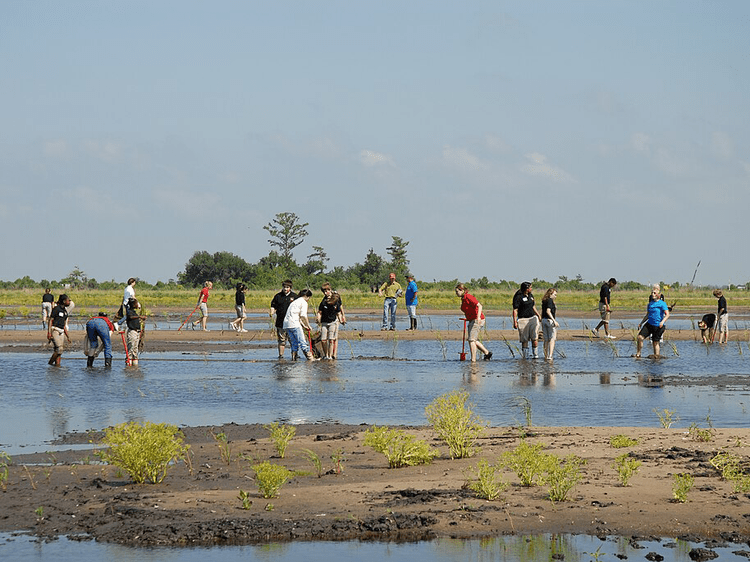
Planting native grasses on a recently completed wetlands restoration project. Photo by lagohsep | CC BY-SA 2.0 via Wikimedia Commons |
|
A farmer’s case study on regenerative farmingTalking about Regen Farming is one thing but doing it is another. The following story involves the Sims family from western Victoria. Here is a summary of what they do as told by them on their website. It’s an inspirational story, well worth a read: We source the highest quality bare seed that we inoculate with minerals and microbes to enhance germination and quorum sensing between each species. By using a diversity of root architecture and root exudates, the multi-species are able to explore larger areas of soil, making them far more water and nutrient efficient. Each root system has its own unique ability to unlock and solubilise different minerals and nutrients. When put together in well-designed mixes, plants will collaborate through quorum sensing and fungal associations to share and release these minerals and nutrients into the soil. This in turn can provide a greater nutrient density to the animals that graze it, resulting in all round gains and gives the earth a greater chance of sequestering and building soil carbon at depth.
|
|
|
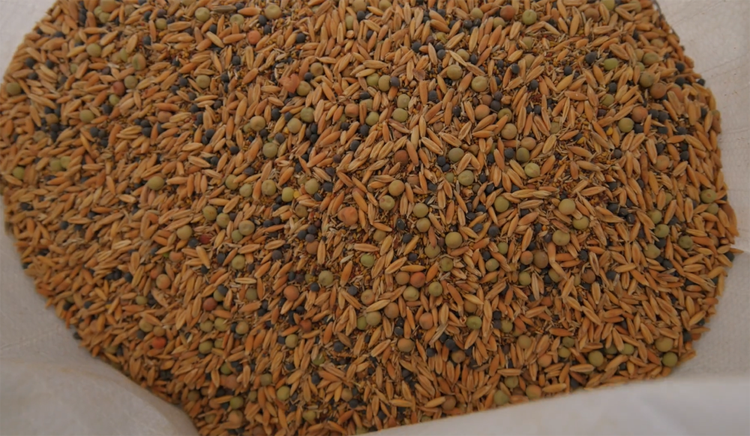
What’s in a Down Under Covers seed mix? Source |
|
Nature-responsible bankingAre you interested in nature-responsible banking? If yes, here is the course for you. If you do the program, please make contact with the IEA to share your learning with us. In early August the Principles for Responsible Banking Academy launched its newest course: Applying nature-responsible banking. This course builds on the PRB Academy’s first course about nature: Introduction to nature and responsible banking. While the introductory course aims to enhance knowledge and understanding of nature and why its health is so important for our people, planet, and profit, Applying nature-responsible banking aims to help learners apply a nature-responsible approach to banking, reducing negative impacts on nature and moving towards positive contributions. Register your interest today to stay informed and receive the latest updates: https://prbacademy.com/contact-us/register-your-interest/ Note that you don’t need to have completed the introductory course (https://ow.ly/KShF50SKUO4) before doing the applied course.
|
|
|
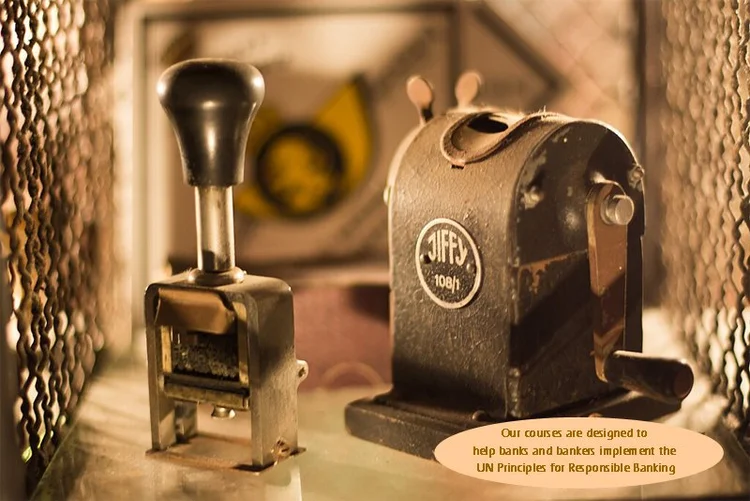
The stamp of authenticity: Participants learn to respect nature through banking practice and observe the UN Principles for Responsible Banking. Photo by Eva Boels | CC BY-SA 4.0 via Wikimedia Commons |
|
Funding to attend courses related to regenerative agricultureInterested in knowing about regenerative/sustainable agriculture but would like financial assistance to do so. Here is a possible answer:
|
Institute news Each month the Board of the Institute accepts new members. It is always reassuring to do this and to know that the purposes of the institute are being accepted by a growing number of people. Here is a list of recent new members. Marcia Smith, Kellie Harris, David Savill, Hamish Mitchell, Jamison Brown, Sarah Davis, Lisette Mill, Josh Frappell, Adriana Marchand, Wendy Bradshaw, Greg Holmes, Rebecca Voisin, Pennie Scott, Nathan Frazer and Bob Meyenn. Welcome all!
|
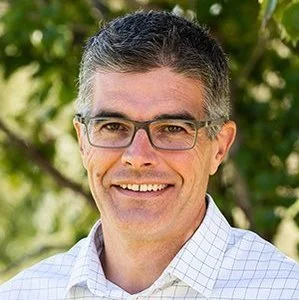
Profile of a Board DirectorJono Forrest, TreasurerJono grew up on a mixed farm on the edge of the Barossa Valley in South Australia and then spent four years jackerooing near Wagga Wagga and Albury, NSW. Following that, he completed a Bachelor of Business (Ag. Commerce) through the University of Sydney's Orange campus. Jono has spent 26.5 years in public practice accounting, with most of his clients in the agriculture industry.
|
|
Jono completed a Holistic Management (HM) course with Bruce Ward 20 years ago, which sparked an interest in more ecological approaches in agriculture. This experience led to his decision to leave the accounting profession in December 2021 to pursue his interest in regenerative agriculture practices. He started formal studies in the Post Graduate Diploma in Regenerative Agriculture through Southern Cross University (SCU), as well as undertaking various short courses and attending conferences. During this period, Jono was introduced to The Mulloon Institute and commenced a role in mid-2022 as the General Manager of Mulloon Consulting (MC). MC carries out landscape rehydration and restoration work in various locations around Australia. Jono lives in Ngarigo country, Cooma, in the Snowy Mountains. He joined the IEA in 2022 and is keen to share his knowledge and skills, and play his part in the purposes of the Institute.
|
Join the Institute of Ecological AgricultureIf you are interested in joining the Institute, then the pathway to doing so is simple. Just go to https://www.ecoag.org.au/membership and fill out the form. If you are not sure about joining but would like to receive the Newsletter, go to https://www.ecoag.org.au/news and fill out the form. If you are not sure about the IEA and need reassuring, best go to our Position Statement and see what it says: https://www.ecoag.org.au/position-statement. If you are interested in becoming accredited within the framework of ecological or regenerative agriculture, please visit the following: https://www.ecoag.org.au/accreditation. Sharing the good oil!The Newsletter needs to circulate through the Australian rural community. It provides a different and important worldview on farming. Help the organisation to grow by circulating it to your friends or to people whom you think would benefit from it!
|
|
Editor: Kerry Cochrane
Design & Presentation: Tony McKenzie
|
|
|
|