Here’s your personal copy of the latest newsletter!͏‌ ͏‌ ͏‌ ͏‌ ͏‌ ͏‌ ͏‌ ͏‌ ͏‌ ͏‌ ͏‌ ͏‌ ͏‌ ͏‌ ͏‌ ͏‌ ͏‌ ͏‌ ͏‌ ͏‌ ͏‌ ͏‌ ͏‌ ͏‌ ͏‌ ͏‌ ͏‌ ͏‌ ͏‌ ͏‌ ͏‌ ͏‌ ͏‌ ͏‌ ͏‌ ͏‌ ͏‌ ͏‌ ͏‌ ͏‌ ͏‌ ͏‌ ͏‌ ͏‌ ͏‌ ͏‌ ͏‌ ͏‌ ͏‌ ͏‌ ͏‌ ͏‌ ͏‌ ͏‌ ͏‌ ͏‌ ͏‌ ͏‌ ͏‌ ͏‌ ͏‌ ͏‌ ͏‌ ͏‌ ͏‌ ͏‌ ͏‌ ͏‌ ͏‌ ͏‌ ͏‌ ͏‌ ͏‌ ͏‌ ͏‌ ͏‌ ͏‌ ͏‌ ͏‌ ͏‌ ͏‌ ͏‌ ͏‌ ͏‌ ͏‌ ͏‌ ͏‌ ͏‌ ͏‌ ͏‌ ͏‌ ͏‌ ͏‌ ͏‌ ͏‌ ͏‌ ͏‌ ͏‌ ͏‌ ͏‌ ͏‌ ͏‌ ͏‌ ͏‌ ͏‌ ͏‌ ͏‌ ͏‌ ͏‌ ͏‌ ͏‌ ͏‌ ͏‌ ͏‌ ͏‌ ͏‌ ͏‌ ͏‌ ͏‌ ͏‌ ͏‌ ͏‌ ͏‌ ͏‌ ͏‌ ͏‌ ͏‌ ͏‌ ͏‌ ͏‌ ͏‌ ͏‌ ͏‌ ͏‌ ͏‌ ͏‌ ͏‌ ͏‌ ͏‌ ͏‌ ͏‌ ͏‌ ͏‌ ͏‌ ͏‌ ͏‌ ͏‌ ͏‌ ͏‌ ͏‌ ͏‌ ͏‌ ͏‌ ͏‌ ͏‌ ͏‌ ͏‌ ͏‌ ͏‌ ͏‌ ͏‌ ͏‌ ͏‌ ͏‌ ͏‌ ͏‌ ͏‌ ͏‌ ͏‌ ͏‌ ͏‌ ͏‌ ͏‌ ͏‌ ͏‌ ͏‌ ͏‌ ͏‌ ͏‌ ͏‌ ͏‌ ͏‌ ͏‌ ͏‌ ͏‌ ͏‌ ͏‌ ͏‌ ͏‌ ͏‌ ͏‌ ͏‌ ͏‌ ͏‌ ͏‌ ͏‌ ͏‌ ͏‌ ͏‌ ͏‌ ͏‌ ͏‌ ͏‌ ͏‌ ͏‌ ͏‌ ͏‌ ͏‌ ͏‌ ͏‌ ͏‌ ͏‌ ͏‌ ͏‌ ͏‌ ͏‌ ͏‌ ͏‌ ͏‌ ͏‌ ͏‌ ͏‌ ͏‌ ͏‌ ͏‌ ͏‌ ͏‌ ͏‌ ͏‌ ͏‌ ͏‌ ͏‌ ͏‌ ͏‌ ͏‌ ͏‌ ͏‌ ͏‌ ͏‌ ͏‌ ͏‌ ͏‌ ͏‌ ͏‌ ͏‌ ͏‌ ͏‌ ͏‌ ͏‌ ͏‌ ͏‌ ͏‌ ͏‌ ͏‌ ͏‌ 
Institute of Ecological Agriculture

Institute of Ecological Agriculture

IEA Newsletter | December 2023


Editorial

A change of President, Secretary and Vice President at the AGM of the Institute of Ecological Agriculture Cooperative Ltd.

Kerry Cochrane, long-standing President of the IEA has handed over the reins to his Vice President – Ebor farmer and student, Ethan Gordon (PhD). Kerry becomes the new Vice President. Rachel Armstrong from Albury-Wodonga is the new Secretary, and she replaces Adam Coates, who is moving to Communications along with new member Kallista Bolton from Western Australia. In all, eight members of the Board of 10 stood for re-election. Stephen Clarkson did not stand for health reasons. We wish Stephen well at this time, and thank him for his passion and dedication to the Institute and its purposes.

Here are some extracts from the outgoing President’s Report.

This is my last hurrah as President and as Chairperson of the Board. It has been a long ride starting with the Association in about 2009 and then the Institute in 2014. That is about 14 years. In that time, I have seen the role of ecological thinking grow from a little-known term to one that now stands alongside – and I think, inside – Regenerative Agriculture.

RA is a term that will end up sharing the same fate as the term sustainable and become greenwashed. The term ecological by contrast is a scientific term and can withstand modern day commercial influences.

There are two significant trends that emerged during my period in the Chair. The first is the role we played in developing the REGEN Agriculture course at Southern Cross University. That was a breakthrough moment signifying the arrival of regenerative agriculture as a force in Australian agricultural education.

While the input we made into the SCU course was significant it wasn’t perfect given that subjects such as agronomy and applied ecology were not included. At the time we felt that something is better than nothing and you have to start somewhere.

It is interesting to note that Regenerative Agriculture was offered at a University that had no agriculture faculty. Perhaps that is why it happened there and not at a traditional agricultural campus such as Wagga or Armidale, to name two. Traditional agriculture programs are imbued with reductionist, mechanistic formulae and prefer not to muddy the waters with notions such as holistic science.

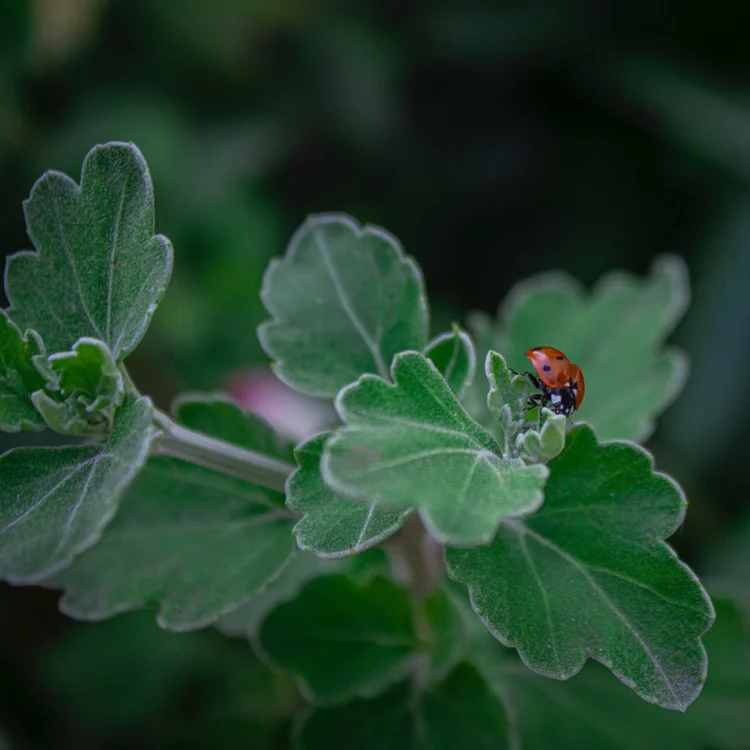
A browsing ladybird

When habitat feels like home. Photo by aisvri on Unsplash

The other significant piece of policy-making undertaken by the Institute over the years was the final emergence of the accreditation program. A key ingredient of this is the Knowledge Circles which are central to the process of becoming accredited in the domain of Regenerative Agriculture. The process of becoming accredited needs to have some rigorous elements to it otherwise the approach will become corrupted. We believe we have the right formula and this can be read on our website at www.ecoag.org.au/accreditation.

The composition of the Board for 2023/24 is:

  • President: Ethan Gordon (PhD) (2023 IEA Vice President)

  • Vice President: Kerry Cochrane (2023 IEA President)

  • Secretary: Rachelle Armstrong (2023 IEA Member)

  • Treasurer: Jono Forrest (2023 IEA Treasurer)

  • Education: Lorraine Gordon (2023 IEA Education Director)

  • Communications: Kallista Bolton (2023 IEA Member) and Adam Coates (2023 IEA Secretary)

  • Membership: Nathan Strawbridge (2023 IEA Membership Director)

  • Accreditation: Katharine Brown (PhD) (2023 IEA Accreditation Director)

  • Fundraising: Chanelle Abdipranoto (2023 Student Representative)


Creating a federation of organisations that seek something other than what conventional agriculture offers

Is it time to think in terms of an organisation that links together those practices in Australia such as organics, biodynamics, permaculture, Food Sovereignty – to name a few – and to think of an organisational link around the principles related to holistic or systems science? Systems thinking recognises the principles of emergence which is what happens when the parts come together to create the whole, and where the whole is several times more productive than the parts. The principle of emergence is fundamental to evolution.

A frond unfurling

A frond unfurling. Photo by Emma Kearns on Unsplash

This concept was raised at the AGM of the IEA and those present saw this as a promising way forward. It is a question that we pose for you as well. Do you think it is worth pursuing? Whether you agree or disagree, please send us your thoughts. You can do so by sending them to kcochrane@ecoag.org.au or Rachelle Armstrong at rachelle@soilrestorationfarming.com.au.


Thinking to the future with Jem Bendell

Deep adaptation: A statement of concern from Professor Jem Bendell at the European Commission. The video presentation is 21 minutes long and for anyone interested in the planet and the path it is on, they are minutes well spent. Bendell’s paper is called Because it's not a drill: technologies for deep adaptation". The paper is available here: https://iflas.blogspot.com/2019/05/as-news-of-our-climate-predicament.html?m=1

For more information on the state of our planet visit the FacingFuture Library at https://www.zotero.org/groups/2738415/facingfuture_library.

Here is the link to the video of Bendell’s presentation:

 Watch video 
 

Measuring soil carbon

The IEA believes the https://www.carbonscout.online program is worth investigating to see how it fits with each individual operation. It seems to provide a framework that could inform strategic planning for an operation to begin and I guess that is half the battle. Take a look and if impressed feed some impressions back to this Newsletter.

A Carbon Scout farm desktop assessment report
 

Becoming connected to the Rockefeller Foundation

We often hear of the Rockefeller Foundation but usually in an American context. Its catchment is actually global, enabling them to support many organisations needing financial assistance. Its objectives dovetail neatly with the Institute and it was this overlap in objectives that we saw as important. If you haven’t heard of the Rockefeller Foundation here is an outline of its mission:

Since 1913, The Rockefeller Foundation has pursued its mission to promote the well-being of humanity around the world by breaking down the barriers that limit who can be healthy, empowered, nourished, well off, secure, and free. To do so, the Foundation and its partners have made big bets that bettered the lives of billions of people and transformed the world’s public health, agriculture, and renewable energy systems.

Today, the climate crisis threatens people around the world as well as progress itself. For the first time in several generations, we face a future where the headwinds to people’s well-being grow stronger by the day – where the next generation could be worse off than its predecessor.

The world has the innovations and ideas to make tomorrow better than today. A transformation is underway in wealthier countries that proves it is possible to reverse the climate crisis while advancing human opportunity. But so far that transformation is both incomplete and inequitable – special interests and structural barriers are keeping everyone from benefiting.

We believe humanity deserves better and can do better. By accelerating – and ensuring everyone can participate – in the transformations that are underway in our energy, food, health and finance systems, the Foundation can help start a new era of progress that ensures everyone has the opportunity to be healthy, empowered, nourished, secure, and free.

Extract from their website: https://www.rockefellerfoundation.org

Happy child on a swing

Healthy, empowered, nourished, secure, and free. Photo by Ronyyz, CC BY-SA 4.0, via Wikimedia Commons


Yes, the IEA is a cooperative!

If you are not sure about the spread and functionality of the cooperative movement take a look at this useful Xmas message from the CO-OP Federation:

 Read message 
 

A simple definition of regenerative agriculture

Regenerative agriculture by definition: Regenerative systems improve the environment, soil, health, animal welfare and communities.

The opposite of regenerative is degenerative.

Degenerative agriculture by definition: Agricultural systems that use degenerative practices and inputs that damage the environment, soil, health, and communities and involve animal cruelty. Use of synthetic toxic pesticides, synthetic water-soluble fertilisers, genetically modified organisms, confined animal feeding operations and destructive tillage systems are not regenerative.

These practices must be called out as degenerative agriculture.

These are the views of Dr André Leu and Dr Vandana Shiva. Their views were published in the Regenerative International Newsletter (07/03/2023). For details of Regenerative International go to https://regenerationinternational.org.

Grim backdrop, pungent to the nose

Grim backdrop, pungent to the nose. Texture by Brandie Marie. Source. Creative Commons Attribution-Noncommercial 3.0 License


Finally, a good video to watch over the Xmas break

The video below is 1 hour 26 minutes long. It is a good length and covers essential arguments about the world we need to have. One of its strengths is that it includes the views of author Charles Eisenstein.

 Watch video 
 

Really finally …

The Institute’s Newsletter will be taking a break until February. In the meantime we thank you for your support during the year and we hope that we can again make progress in 2024 in establishing an agriculture that we think is possible!

Editor: Kerry Cochrane
Design & Presentation: Tony McKenzie (PhD)


Become a member today!

facebook

We acknowledge the Traditional Custodians of these lands; on which we work, live and play. We pay our respects to the Elders past, present and emerging. It is important that we recognise their long histories with Country, and the care they have given to her for thousands of years. We celebrate, value and include people of all backgrounds, genders, sexualities, cultures, bodies and abilities.

Australian Institute of Ecological Agriculture Co-operative Ltd , Kite Street, Orange, NSW, 2800, Australia

Unsubscribe