Please find attached your copy of the latest newsletter of the Institute of Ecological Agriculture. Enjoy!͏‌ ͏‌ ͏‌ ͏‌ ͏‌ ͏‌ ͏‌ ͏‌ ͏‌ ͏‌ ͏‌ ͏‌ ͏‌ ͏‌ ͏‌ ͏‌ ͏‌ ͏‌ ͏‌ ͏‌ ͏‌ ͏‌ ͏‌ ͏‌ ͏‌ ͏‌ ͏‌ ͏‌ ͏‌ ͏‌ ͏‌ ͏‌ ͏‌ ͏‌ ͏‌ ͏‌ ͏‌ ͏‌ ͏‌ ͏‌ ͏‌ ͏‌ ͏‌ ͏‌ ͏‌ ͏‌ ͏‌ ͏‌ ͏‌ ͏‌ ͏‌ ͏‌ ͏‌ ͏‌ ͏‌ ͏‌ ͏‌ ͏‌ ͏‌ ͏‌ ͏‌ ͏‌ ͏‌ ͏‌ ͏‌ ͏‌ ͏‌ ͏‌ ͏‌ ͏‌ ͏‌ ͏‌ ͏‌ ͏‌ ͏‌ ͏‌ ͏‌ ͏‌ ͏‌ ͏‌ ͏‌ ͏‌ ͏‌ ͏‌ ͏‌ ͏‌ ͏‌ ͏‌ ͏‌ ͏‌ ͏‌ ͏‌ ͏‌ ͏‌ ͏‌ ͏‌ ͏‌ ͏‌ ͏‌ ͏‌ ͏‌ ͏‌ ͏‌ ͏‌ ͏‌ ͏‌ ͏‌ ͏‌ ͏‌ ͏‌ ͏‌ ͏‌ ͏‌ ͏‌ ͏‌ ͏‌ ͏‌ ͏‌ ͏‌ ͏‌ ͏‌ ͏‌ ͏‌ ͏‌ ͏‌ ͏‌ ͏‌ ͏‌ ͏‌ ͏‌ ͏‌ ͏‌ ͏‌ ͏‌ ͏‌ ͏‌ ͏‌ ͏‌ ͏‌ ͏‌ ͏‌ ͏‌ ͏‌ ͏‌ ͏‌ ͏‌ ͏‌ ͏‌ ͏‌ ͏‌ ͏‌ ͏‌ ͏‌ ͏‌ ͏‌ ͏‌ ͏‌ ͏‌ ͏‌ ͏‌ ͏‌ ͏‌ ͏‌ ͏‌ ͏‌ ͏‌ ͏‌ ͏‌ ͏‌ ͏‌ ͏‌ ͏‌ ͏‌ ͏‌ ͏‌ ͏‌ ͏‌ ͏‌ ͏‌ ͏‌ ͏‌ ͏‌ ͏‌ ͏‌ ͏‌ ͏‌ ͏‌ ͏‌ ͏‌ ͏‌ ͏‌ ͏‌ ͏‌ ͏‌ ͏‌ ͏‌ ͏‌ ͏‌ ͏‌ ͏‌ ͏‌ ͏‌ ͏‌ ͏‌ ͏‌ ͏‌ ͏‌ ͏‌ ͏‌ ͏‌ ͏‌ ͏‌ ͏‌ ͏‌ ͏‌ ͏‌ ͏‌ ͏‌ ͏‌ ͏‌ ͏‌ ͏‌ ͏‌ ͏‌ ͏‌ ͏‌ ͏‌ ͏‌ ͏‌ ͏‌ ͏‌ ͏‌ ͏‌ ͏‌ ͏‌ ͏‌ ͏‌ ͏‌ ͏‌ ͏‌ ͏‌ ͏‌ ͏‌ ͏‌ ͏‌ ͏‌ ͏‌ ͏‌ ͏‌ ͏‌ ͏‌ ͏‌ ͏‌ ͏‌ ͏‌ 
Institute of Ecological Agriculture

Institute of Ecological Agriculture

IEA Newsletter | February 2023


Editorial

This first edition of the IEA Newsletter for 2023 raises an issue that is in the back of many minds – or at least should be – and that is the risk we face called the 6th Extinction.

Dying Sun, by Istrandar

Dying Sun, by Maxime Minard | (CC BY-NC-ND 3.0)

A common refrain is that humans are not sufficiently coordinated on a planetary wide framework to prevent this happening, particularly given our continuing reliance on hydrocarbon energy and its consequential impact on climate. With new coal mines and oil wells being approved, and in the pipeline, the question about the future is most relevant. In addition to this there is the war in Ukraine that pumps millions of tonnes of CO2 into the atmosphere thanks to Putin and his lust for power. That fact seems to be overlooked as the media focuses on the loss of life and the destruction of buildings. However, given the dangers to the planet that are underlined by a burgeoning level of CO2 in the atmosphere – now standing at 419 ppm – we need to increase the sense of urgency over climate change and our failure to arrest the rise in the CO2 level.

One writer who draws our attention to the possibility of the 6th extinction is American David Hinton, whose book Wild Mind, Wild Earth addresses the plight humanity faces. Here is David Hinton’s voice as stated in a recent issue of Emergence magazine:

I mean, I’m here in Vermont, and in Vermont, Native Americans lived here – well, like everywhere in North America – they lived here in Vermont for over ten thousand years. The ecosystem was basically intact, and that’s because they had that ethical system built into their fundamental cultural assumptions – the assumptions that guided their lives. They didn’t think about them. They didn’t question them. They were simply the assumptions, the unthought assumptions. When the Europeans got here with their unthought assumptions, they clear-cut the whole state within, you know, a century. And those two outcomes – one, an intact ecosystem after ten thousand years, and the other, a completely devastated ecosystem after a century or less – those are philosophical differences. Those are differences in cultural assumptions – that’s what drove those two things. It’s not technology.

David Hinton | Photo by Phil Dera

Therein lies his primary argument. It is our assumptions that lead us into doing what the planet needs less of and these assumptions are philosophically based. To state it differently, if we want our ecosystems to remain in a healthy state we have to change our thinking and, consequently, our actions. We have no choice – otherwise the 6th extinction will be upon us.

In essence we need a deeper kinship with nature. Hinton uses examples of how the early Chinese created Taoism and Zen Buddhism to enable participants to align with nature (i.e., show kinship towards it) as did the poets of the Romantic period such as Wordsworth, Shelley and Coleridge. He was far less kind to the monotheistic religions such as Christianity and its message about nature and our kinship with it.

The Institute of Ecological Agriculture strongly supports the essence of Hinton’s arguments and shortly will be presenting a 9-session webinar series on this very topic. Thanks to a Landcare grant from the Federal Government we are able to offer this course at the low price of $10 a session (a session is one hour). Notes will be provided electronically or if you wish to buy the hard copy, they will be sent to you but at cost price. Participants will have to enrol in the full course ($90).

If interested, please email kcochrane@ecoag.org.au. Include your email address and mobile number in your expression of interest.

Additional details on the course

The focus of the course is on how we think, learn, do, explore, reflect, conceptualise, and value, and how all these qualities relate to our worldview. This in turn opens up an exploration of ecological or regenerative agriculture which in essence features throughout as a backdrop to the principles as outlined above. The framework of the course is human ecology and is therefore about humans’ relationship, or kinship, with nature.

Kerry Cochrane, President & Editor

Green floating Earth sustaining a green tree

Human ecology, about humans’ relationship, or kinship, with nature | Artwork by Novembro | web source | (CC BY-NC-ND 3.0)


The Science-based evidence to ban Glyphosate and GMOs

Andre Leu is a name that is aligned with organics, having run the international organic organisation, IFOAM, for several years. Today he is heavily involved as a Director with Regeneration International. Andre is also the author of a fine piece of research on chemicals in farming called Myths of Safe Pesticides. In this edition of the IEA Newsletter Andre takes aim at glyphosate and GMO corn. Read the article here.

Crop-spraying in progress

Boom spray application, from Aqua Mechanical | web source | (CC BY 2.0, via Wikimedia Commons)


How does regenerative pasture management stack up financially?

Source: The Regenerative Agriculture Alliance

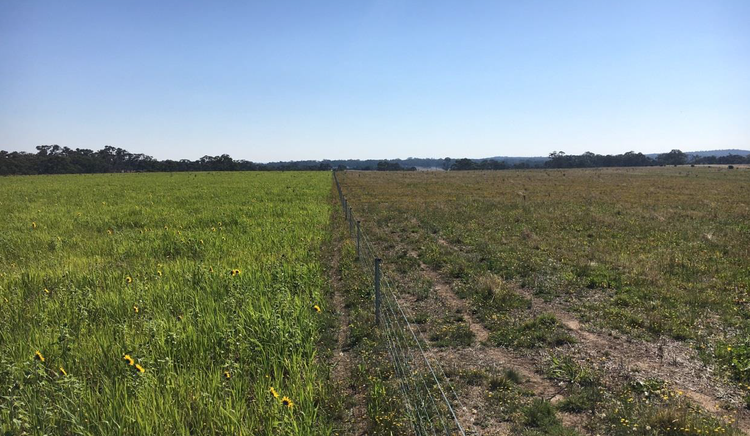
Two paddocks at a property in central Victoria are being managed in two very different ways, with a third left untouched as a control, as part of a research project to assess the financial outcomes of regenerative and conventional methods.

Pasture management trial, Beckworth Court

Pasture management trial, Beckworth Court

The Beckworth RegenAg Project involves Southern Cross University, the Australian Regenerative Agriculture Alliance, Nutrisoil, AGF Seeds, and Central Victorian Regenerative Farmers (CVRF) at Paraway Pastoral Co’s Beckworth Court property.

It is one of eight projects funded through the Commonwealth Department of Agriculture, Fisheries and Forestry’s $2.5 million Soil Extension Program.

By comparing the financial outcomes of the regenerative paddock and the conventional paddock, the project aims to inform farmers of potential benefits and provide practical advice.

CVRF project officer, Ross Davey, said the financial outcomes will be assessed by quantifying input costs versus monetised production results, in the form of net feed utilised by stock converted to a theoretical stock weight gain. Natural capital improvement will also be part of the financial outcome assessment.

For details of this project, read the article at the Southern Cross University’s Farming Together website .


The Global Farm Metric nears completion

The Global Farm Metric has entered its 7th year of trials in the UK and in the USA, Africa and Australia. The GFM measures the sustainability of a farm and comprises 11 categories each of which is divided into 3 components.

It was designed to be a global model in terms of its application to farming in any country in any farming industry right down to the individual farm level. What the Sustainable Food Trust is attempting is a simple language that can apply to farming everywhere. A bold scheme and one that is nearing its finishing stage with trial reports that indicate that it is operating at 86% efficiency.

GFM - a common framework for sustainability

GFM cover page | web source

The latest release of details can be viewed at the following link but you are advised to start at the 15 minute mark to see/hear from the Global Farm Metric leader Adele.

 Open video here 
 

Soil is a living organism

The purpose of the IEA Newsletter is to facilitate a greater understanding of what it all means. In that context the following link has great value. Its focus is on the soil and it provides a pretty good coverage of that aspect of regenerative farming. It doesn’t engage with how farmers think but few articles on regenerative farming do… and that is where the IEA stands out as different. However, today the focus is on the soil and the impact of regenerative farming. The film lasts 12 minutes but it is full of biology and how the world connects.

Mycorrhizal root tips (amanita)

Mycorrhizal root tips (amanita) by Ellen Larsson | web source | (CC BY 2.5)

 Open video here 
 

Having problems remembering the components of regenerative agriculture?

It’s as simple as saying 6-5-4-3. Click here to find out more.

A South Dakota soybean farmer's rich soil

Healthy soil should look like chocolate cake with air holes permeating throughout. | USDA NRCS South Dakota, Public domain, via Wikimedia Commons | web source

While the 6-5-4-3 motto has value it omits to comment on arguably the most important aspect – that of the operator and how they think, what their world view is, and how their values influence what they decide to do. This is where the IEA has a distinct advantage in that the human element is the starting point for learning about regenerative agriculture. The physical components of regenerative agriculture are straightforward, which can’t be said for the human or subjective element. Remember, the IEA has a set of 9 webinars which will help you gain a holistic view of the subject. Refer to earlier comment in this edition.


Where does carbon farming meet agtech?

With more companies launching new tools and solutions, it can be difficult to choose between competing technologies for your project idea, and how the different solutions fit at the various stages of projects.

We now look at where innovation in agtech is creating new options for carbon farmers. The latest edition of Regen Farming News explains what different products are doing for carbon farmers and at what stage you might think about applying technology to make carbon farming easier.

Read on here.


Share the stories

If you know of someone who might like to read up on some of the stories in this edition or previous editions please send this copy to them and invite your colleagues to our website at www.ecoag.org.au/resources.

If you have a story you are pleased about and would like to share please contact kcochrane@ecoag.org.au.

And lastly, if you would like to join the 9-session webinar series please send an email to the above address. The starting date will be determined when we have a viable number of participants. At $10 a session or $90 all up it is being offered at basement pricing! This program will greatly assist those interested in accreditation under the IEA banner of Ecological (Regenerative) Agriculture. Information on the Institute’s accreditation scheme is available here.


Editor: Kerry Cochrane
Technical Advisors: Sue Hill & Tony McKenzie


Become a member today!

facebook

We acknowledge the Traditional Custodians of these lands; on which we work, live and play. We pay our respects to the Elders past, present and emerging. It is important that we recognise their long histories with Country, and the care they have given to her for thousands of years. We celebrate, value and include people of all backgrounds, genders, sexualities, cultures, bodies and abilities.

Australian Institute of Ecological Agriculture Co-operative Ltd , Kite Street, Orange, NSW, 2800, Australia

Unsubscribe